
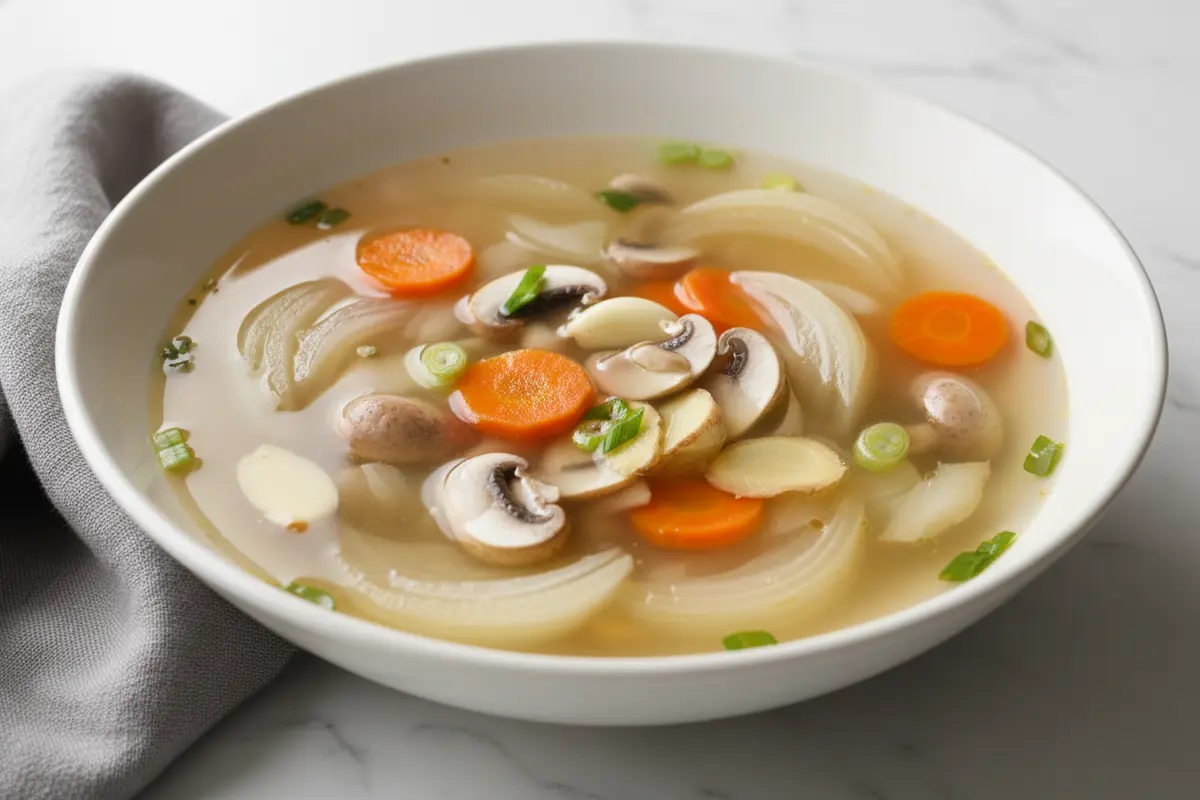
This is the silky, aromatic broth you get at your favorite hibachi restaurant—except you’re making it at home with a simple sear-and-simmer method that fills your kitchen with warmth.
⚡ Quick Recipe Snapshot: Prep: 5 minutes | Cook: 65 minutes | Total: 70 minutes | Yield: About 10 cups | Difficulty: Medium | Cuisine: Japanese | Calories: 46 per serving | Season: Anytime
Why This Recipe Works
- Deep, cozy flavor from a shortcut: Searing the onions, garlic, carrots, and ginger before simmering builds a golden, caramelized base that tastes like it’s been simmering for hours—but it hasn’t.
- Clear, clean broth with real body: A mix of chicken and beef broth creates a light yet savory foundation that’s nothing like canned soup.
- Weeknight-friendly and freezer-ready: One hour of hands-off simmering, then strain and serve. Make a big batch and freeze for busy nights.
Grocery List (& Shortcuts)
Main Players:
- 2 teaspoons sesame oil (or peanut oil)
- 8 cups chicken broth
- 4 cups beef broth
- 4 cups water
- 1 large sweet onion, peeled and cut into wedges
- 6 cloves garlic, peeled and smashed
- 2 large carrots, cut into chunks
- 2-inch piece fresh ginger, sliced
- 4 whole scallions, chopped
- 10 button mushrooms, sliced thin
- Salt to taste
Smart Shortcut: Use store-bought broth—there’s no shame here. Quality broth is the backbone of this soup, so grab the good stuff and skip the hours of making stock from scratch.
Substitutions: Swap sesame oil for peanut oil or vegetable oil if you prefer. Use cremini or shiitake mushrooms instead of button mushrooms for earthier depth. If you’re avoiding beef, use all chicken broth (12 cups total) and add a splash of soy sauce for umami.
Step-by-Step
Sear the Vegetables
Place a large 8-quart stock pot over medium-high heat. Add the sesame oil, then the onion wedges, smashed garlic cloves, carrot chunks, and ginger slices. Sear everything on all sides for 5–7 minutes, stirring occasionally, until the onions are golden and caramelized at the edges. Watch the garlic closely so it browns but doesn’t burn—you want fragrant, not bitter.
Simmer the Broth
Pour in the chicken broth, beef broth, and water. Bring to a boil, then lower the heat to a gentle, rolling simmer. Simmer uncovered for at least 60 minutes. The broth will deepen in color and become silky and aromatic. You’ll know it’s ready when the flavors taste balanced and warm.
Strain and Serve
Use a skimmer or slotted spoon to carefully remove the softened vegetables from the broth and discard them. Taste the broth and season with salt as needed. Ladle the hot broth into bowls and top each serving with chopped scallions and a small handful of sliced mushrooms. The mushrooms will soften slightly from the heat of the broth.
Theo’s Tips
- Caramelize, don’t rush: Take your time searing the vegetables. That golden, slightly charred surface is where the magic happens—it builds layers of flavor that make this broth taste restaurant-quality.
- Strain it smooth: If you want a crystal-clear broth (the hallmark of a true Japanese clear soup), strain the broth through a fine-mesh sieve or cheesecloth after simmering. It’s an extra step, but it’s worth it for that pristine, elegant look.
- Make ahead and freeze: Simmer the broth, strain it, and let it cool completely. Freeze in ice cube trays or quart containers for up to 3 months. Thaw and reheat gently, then add fresh scallions and mushrooms when you serve.
Storage & Leftovers
Fridge: Store the strained broth in an airtight container for up to 4 days. Reheat gently on the stovetop over medium heat, stirring occasionally, until steaming. Add fresh scallions and mushrooms when serving.
Freezer: The broth freezes beautifully for up to 3 months. Thaw overnight in the fridge, then reheat on the stovetop. The vegetables should be discarded after straining, so you’re just freezing the golden broth itself.
Can I make this in a slow cooker?
Yes. Sear the vegetables in a skillet first (this step is important), then transfer everything to a slow cooker with the broths and water. Cook on low for 4–5 hours. Strain and serve as directed.
What’s the difference between this and regular onion soup?
Japanese clear onion soup is a light, aromatic broth with a delicate balance of flavors—no cream, no cheese, no heavy toppings. It’s meant to soothe and refresh, not fill you up. Regular French onion soup is heartier, often topped with bread and melted cheese.
Can I use frozen vegetables?
Fresh vegetables work best because they caramelize better and release more flavor during searing. If you’re using frozen, thaw them first and pat dry so they brown instead of steam.
How do I know when the broth is done?
Taste it. The flavors should be balanced and warm, with a subtle sweetness from the caramelized onions and a gentle savory depth from the broths. If it tastes thin or one-note, simmer a bit longer.
💡 Love this recipe? Follow Cooking Save on Pinterest.
Save This Recipe & Tell Me How It Went!
This Japanese clear onion soup is the kind of recipe that tastes like a warm hug—simple, honest, and deeply satisfying. Make a big batch, freeze it, and you’ll have a cozy bowl ready whenever you need it. I’d love to hear how it turns out for you. Drop a comment below, save this recipe, and let me know if you tried any fun variations.
Stay cozy,
Theo
Japanese Clear Onion Soup
Ingredients
Equipment
Method
- Place a large 8-quart stock pot over medium-high heat. Add the sesame oil, then the onion wedges, smashed garlic cloves, carrot chunks, and ginger slices.
- Sear everything on all sides for 5–7 minutes, stirring occasionally, until the onions are golden and caramelized at the edges.
- Pour in the chicken broth, beef broth, and water. Bring to a boil, then lower the heat to a gentle, rolling simmer.
- Simmer uncovered for at least 60 minutes. The broth will deepen in color and become silky and aromatic.
- Use a skimmer or slotted spoon to carefully remove the softened vegetables from the broth and discard them.
- Taste the broth and season with salt as needed. Ladle the hot broth into bowls and top each serving with chopped scallions and a small handful of sliced mushrooms.
