
Crusty on the outside, impossibly tender on the inside — this is the kind of rustic, hearty loaf that makes your whole kitchen smell like a cozy mountain morning, and it comes together with just four ingredients and zero fuss.
⚡ Quick Stats: Prep: ~15 mins | Cook: 30 mins | Total: ~45 mins | Serves: 8 | Difficulty: Easy | Season: Spring (and honestly, any time)
From My Kitchen
There’s a particular kind of panic that sets in when you realize you forgot to buy bread and dinner is in an hour. I’ve been there more times than I’d like to admit — usually on a Tuesday, usually while also searching for a missing sock and answering a question about homework. That’s exactly how this easy Irish soda bread became a permanent fixture in my kitchen rotation.
The first time I made it, I was half-convinced it wouldn’t work. No yeast? No rising time? No kneading? It felt too good to be true. But that’s the quiet magic of soda bread — the buttermilk and baking soda do all the heavy lifting, and you just get to show up, stir, and bake. My loaf that first night was a little lopsided, the X I scored on top wandered off to one side, and I didn’t care one bit. It was golden, crusty, and gone within twenty minutes.
This Irish soda bread recipe is the definition of special without fussy. It fits into a real Tuesday night, and it tastes like you planned it all along.
Why This Recipe Works
- No yeast, no waiting: Baking soda and buttermilk create a natural rise reaction — your bread goes from bowl to oven in minutes, no proofing required.
- Four ingredients, big payoff: Flour, baking soda, salt, and buttermilk. That’s it. Everything is already in your kitchen right now.
- That crusty, golden exterior: Starting at 450°F gives the loaf a beautiful, crackly crust before you drop the heat to finish it through — it’s the secret to that classic crusty Irish soda bread texture.
- Wonderfully forgiving: This dough doesn’t need to be perfect. A little shaggy, a little rustic? That’s exactly right. Overworking is the only real pitfall, and I’ll walk you through how to avoid it.
The Grocery List (& Shortcuts)
Main Players
- 2 cups all-purpose flour — Standard all-purpose is perfect here. No need for bread flour or anything fancy.
- 1/2 tsp baking soda — Make sure yours isn’t ancient. Fresh baking soda means a better rise.
- 1/2 tsp salt — Simple kosher or table salt works great.
- 1 cup buttermilk — This is the real star of the show. The acidity reacts with the baking soda to give the bread its lift and that slightly tangy, tender crumb.
The Cooking Save Shortcut
Shortcut: No buttermilk in the fridge? Make your own in two minutes flat. Add 1 tablespoon of white vinegar or lemon juice to a measuring cup, then fill it to the 1-cup line with regular milk. Give it a stir and let it sit for 5 minutes — it’ll curdle slightly, and that’s exactly what you want. Works like a charm every single time.
Substitutions
- Dairy-Free: Use a plant-based milk (oat milk works especially well) with 1 tablespoon of apple cider vinegar to mimic buttermilk.
- Gluten-Free: A 1:1 gluten-free all-purpose flour blend can be substituted, though the texture will be slightly more dense. Still delicious.
- Want more flavor? This is a classic base recipe — stir in 1 teaspoon of caraway seeds for a traditional soda bread recipe with caraway seeds, or add a handful of raisins for something a little sweeter.
- Out of baking soda? Unfortunately, this one’s non-negotiable — baking soda is what makes the bread rise, so don’t skip it.
Equipment You Actually Need
- A large mixing bowl — Big enough to mix without flour flying everywhere.
- A fork — For bringing the dough together. That’s really it.
- A Dutch oven or cast iron skillet — Either one works beautifully and helps create that gorgeous, even crust. No Dutch oven? A regular baking sheet lined with parchment will do the job too.
- A sharp knife — For scoring that classic X on top.
No stand mixer, no bread machine, no special tools. Just your hands and a bowl.
Step-by-Step: Let’s Bake This Bread
Phase 1: Prep Your Dough
- Preheat your oven to 450°F and set a rack in the middle position. You want that oven fully hot before the bread goes in.
- Whisk the flour, baking soda, and salt together in a large bowl until everything is evenly combined. No lumps of baking soda hiding in the corners.
- Create a well in the center of your flour mixture — just push the flour to the sides to make a little crater — and pour in the buttermilk.
- Stir with a fork, pulling the flour in from the edges little by little. You’re looking for a thick, shaggy dough. Once it gets too thick for the fork, switch to your hands and gently bring the last bits of flour together. Do not overwork it — mix just until it comes together. Tough bread comes from too much handling.
Phase 2: Shape & Score
- Turn the dough out onto a lightly floured surface and gently shape it into a round about 6 inches across and 1½ inches thick. Think rustic, not perfect — a slightly lumpy round is completely fine.
- Transfer the dough to your Dutch oven or cast iron skillet. Score a large X across the top with a sharp knife, cutting about ½ inch deep. This isn’t just pretty — it helps the bread bake evenly through the center.
Phase 3: Bake to Golden
- Bake at 450°F for 10 minutes — this blast of heat sets the crust and gets things golden fast.
- Reduce the oven temperature to 400°F and continue baking for about 20 more minutes, until the bread is deeply golden brown and sounds hollow when you tap the bottom. That hollow thump is your green light.
- Transfer to a wire rack and let it cool for at least 10–15 minutes before slicing. I know it’s hard to wait. Do it anyway — the inside needs a few minutes to finish setting up.
You’ll know it’s ready when the kitchen smells like warm, toasty bread and the crust is a deep, crackly golden brown.
Riley’s Tips
Riley’s Tip: Getting That Perfect Texture
The number one rule with this Irish soda bread recipe is don’t overwork the dough. Unlike yeast breads that need kneading to develop gluten, soda bread wants to be handled as little as possible. Mix until it just barely comes together — lumpy and rough is good. The less you fuss with it, the more tender the crumb will be.
Tip: The “Oops” Fix
If your dough feels too sticky to shape, dust your hands and the work surface with a little extra flour and work quickly. If it looks too dry and crumbly, add a small splash of buttermilk — just a tablespoon at a time. And if your loaf comes out a little flat or dense? It’s almost always from old baking soda or overworked dough. Both are easy fixes for next time, and the bread will still taste wonderful.
Make Ahead
Make Ahead: Soda bread is genuinely best the day it’s baked — that crust is at its crunchiest right out of the oven. That said, you can mix your dry ingredients the night before and store them covered on the counter. When you’re ready to bake, just add the buttermilk and go. Dinner-ready bread in under 35 minutes.
What to Serve With This
For a Cozy Dinner
Thick slices of this crusty Irish soda bread are made for dunking. Serve alongside a big pot of tomato soup, a hearty beef stew, or a simple bowl of white bean and vegetable soup. Add a little dish of good salted butter on the table and watch it disappear. A mug of strong tea on the side never hurt anyone either.
For a Spring Brunch
Slice it up and serve with soft scrambled eggs, smoked salmon, and a little cream cheese. It’s the kind of relaxed, pull-it-all-together spread that feels special without requiring a single complicated step. Perfect for a lazy Sunday morning in the mountains — or wherever your kitchen happens to be.
For a Party or Gathering
Set the whole loaf on a wooden board with a variety of toppings — honey butter, sharp cheddar, jam — and let people tear into it themselves. It’s rustic, it’s warm, and it always starts a conversation.
Storage & Leftovers
- Counter: Wrap leftover soda bread in a clean kitchen towel or loosely in foil and keep at room temperature. It’s best within 1–2 days.
- Fridge: You can refrigerate it for up to 3–4 days, but the crust will soften. Still perfectly good for toast.
- Reheating: Warm individual slices in a toaster or a 350°F oven for 5 minutes to bring back some of that crunch. A dry skillet over medium heat works beautifully too.
- Freezer: Yes! Slice the cooled loaf, wrap slices individually in plastic wrap, and freeze for up to 2 months. Pull out a slice whenever you need it and toast straight from frozen.
Frequently Asked Questions
Can I add caraway seeds to this recipe?
Absolutely — and it’s a wonderful addition. Stir 1 to 2 teaspoons of caraway seeds into your dry ingredients before adding the buttermilk. A soda bread recipe with caraway seeds has a slightly earthy, savory flavor that pairs beautifully with soups and stews. Totally optional, but very traditional.
Why do you score an X on top of soda bread?
It’s not just for looks! Scoring the X helps the heat penetrate the center of the loaf so it bakes evenly all the way through. There’s also an old Irish tradition that says it “lets the fairies out” — which I think is a perfectly good reason on its own.
Can I double this recipe for a crowd?
You can, but I’d recommend making two separate loaves rather than one giant one. Doubling the dough and trying to bake it as a single round can lead to an undercooked center. Two smaller loaves bake more evenly and you get double the crusty edges — which is never a bad thing.
Do I need a Dutch oven to make this?
Nope! A Dutch oven or cast iron skillet gives you the best, most even crust, but a regular baking sheet lined with parchment paper works just fine. The bread will still be golden and delicious — just with a slightly less dramatic crust on the bottom.
Why is my soda bread dense?
The two most common culprits are overworked dough and old baking soda. Handle the dough as gently and briefly as possible, and do a quick freshness test on your baking soda: drop a small amount into hot water — if it bubbles vigorously, you’re good to go.
💡For more recipes, follow me on Pinterest.
Try This Easy Irish Soda Bread Tonight
If you make this easy Irish soda bread, I’d love to hear how it went. Drop a comment below and tell me — did you keep it classic, or did you stir in some caraway seeds? Did you serve it with soup, or did it disappear with just butter before dinner even hit the table? (No judgment — that’s happened here too.)
Save this recipe for the next time you need a loaf of bread and you need it now. It’s one of those recipes that earns a permanent spot in your rotation — the kind you’ll find yourself making on a random Wednesday just because you can.
Pull up a chair,
Riley 🍂
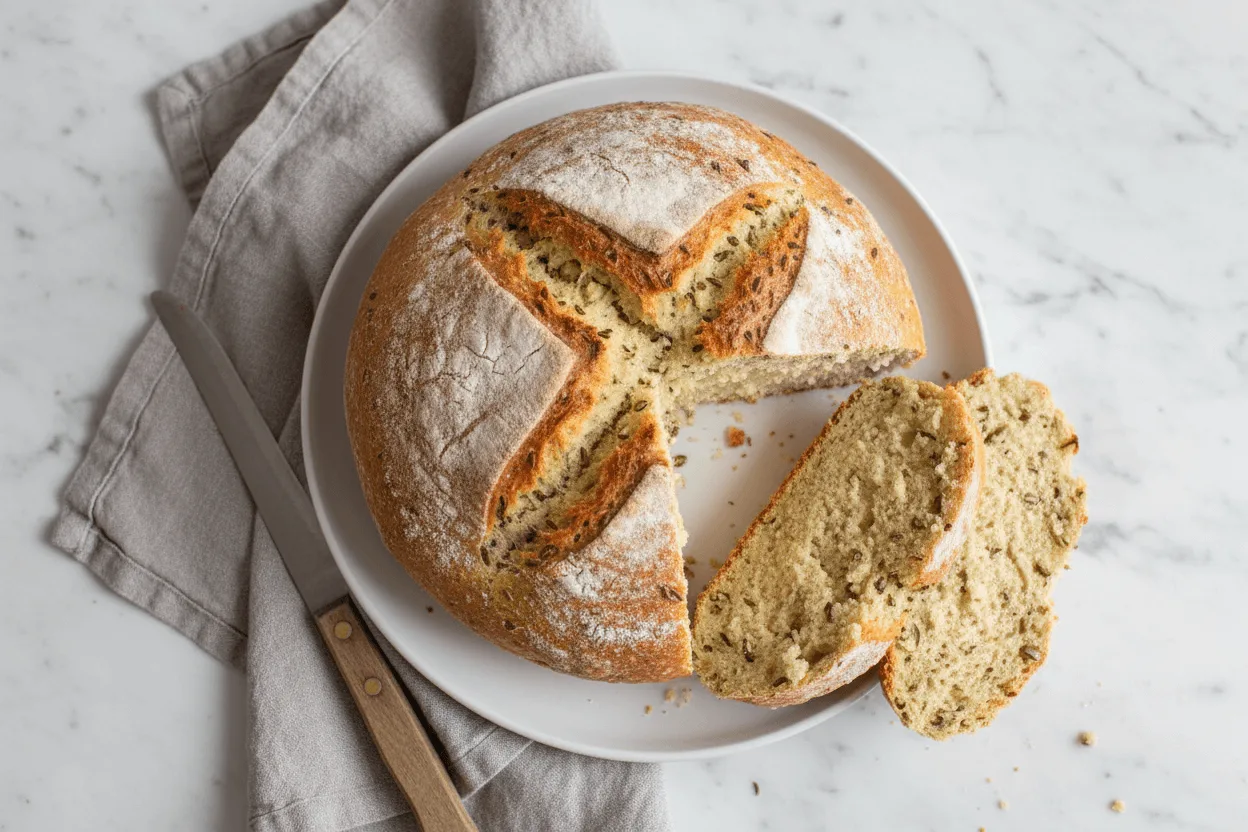
Easy Irish Soda Bread
Ingredients
Equipment
Method
- Preheat your oven to 450°F and set a rack in the middle position.
- Whisk the flour, baking soda, and salt together in a large bowl.
- Create a well in the center of the flour mixture and pour in the buttermilk.
- Stir with a fork and then use your hands to gently combine the mixture without overworking.
- Transfer the dough to a floured surface, shape into a round, and score an X on top.
- Bake at 450°F for 10 minutes, then reduce the temperature to 400°F for another 20 minutes.
- Let the bread cool on a wire rack for at least 10–15 minutes before slicing.
