
That tub of gochujang paste sitting in your fridge? It’s about to become a bubbling, deeply savory Korean stew that’s cozy enough for a weeknight dinner and bold enough to feel special.
⚡ Quick Recipe Snapshot: Prep: 15 minutes | Cook: 20–25 minutes | Total: 40–45 minutes | Difficulty: Medium | Cuisine: Korean | Season: Anytime
Why This Recipe Works
- One-pot magic: Everything cooks together in a single pot, and the gochujang base builds deep, layered heat without fuss or extra steps.
- Flexible protein: Beef, chicken, pork, or tofu all work beautifully—use what you have on hand or what fits your mood.
- Shortcut-friendly: No fancy broth required; water and a handful of pantry staples (fish sauce, soy sauce, garlic) do all the heavy lifting.
Grocery List (& Shortcuts)
Main Players:
- 4 tablespoons gochujang (Korean red chili paste)
- 1 tablespoon gochugaru (Korean red chili flakes)
- 150–200 grams beef (ribeye or sirloin), or chicken, pork, or tofu
- 1 medium potato
- 1/2 onion
- 2 shiitake mushrooms + small handful oyster mushrooms
- 2 cheongyang chili peppers (or 1 jalapeño)
- 2 spring onion stalks
- 2 tablespoons minced garlic
- 2 tablespoons vegetable oil
- 2 tablespoons sesame oil
- 2.5 cups water (or anchovy-kelp broth for extra depth)
- 2 tablespoons soup soy sauce (regular soy sauce works too)
- 1 tablespoon fish sauce
- Black pepper to finish
Smart Shortcut: Use anchovy-kelp broth instead of plain water if you have it on hand—it adds a savory backbone without extra effort.
Substitutions:
- Protein: Swap beef for chicken breast, pork shoulder, or extra-firm tofu (no cooking time change needed).
- Mushrooms: Button or cremini mushrooms work fine if you can’t find shiitake or oyster.
- Chili pepper: One jalapeño or even a pinch of extra gochugaru if fresh peppers aren’t available.
- Gluten-free: Use tamari or coconut aminos instead of soy sauce; fish sauce is naturally gluten-free.
Step-by-Step
Prep (15 minutes)
Slice the spring onion stalks into thin rounds (use the white parts—they’ll flavor the oil). Cut the potato into thin slices. Slice the onion thinly, and slice the chili peppers very thin. Cut your protein into small, thin slices so it cooks quickly. Separate the oyster mushrooms into individual pieces and slice the shiitake mushrooms thin. Measure out your gochujang and set it aside.
Build the Base (5 minutes)
Heat vegetable oil and sesame oil together in a large pot or wok over low heat. Once hot, add the gochujang and stir-fry for 45 seconds to 1 minute until it starts to sizzle and bubble in the oil—this blooms the flavor. Stir in the gochugaru, then immediately add the water. Raise the heat to medium-high and bring to a boil.
Simmer & Build (15–20 minutes)
Add the sliced protein and potato slices to the boiling liquid. Stir in the minced garlic, soy sauce, and fish sauce. Let it boil for 5 minutes—the fish sauce smell will fade as it simmers. The potatoes should start to soften. Add the onion slices, both types of mushrooms, and the sliced chili peppers. Return to a boil and simmer for 7–10 minutes more. Test a potato slice with a chopstick or fork—it should pierce easily when done.
Finish & Rest (10 minutes)
Stir in the fresh spring onion slices and crack 8–10 grinds of black pepper over the top. Turn off the heat and let the stew rest for 10 minutes—this allows all the flavors to settle and meld. Taste and adjust: if it feels too salty, splash in a little water to dilute.
Theo’s Tips
- Texture matters: Don’t skip the resting step. Those 10 minutes make a huge difference—the stew goes from hot and sharp to rounded and cozy, and the potatoes finish cooking gently in the residual heat.
- Fish sauce rescue: If the smell is overpowering, don’t panic. It mellows completely as the stew simmers and rests. Trust the process.
- Make-ahead magic: This stew actually tastes better the next day. Make it ahead, chill it, and reheat gently on the stovetop with a splash of water. The flavors deepen overnight.
Storage & Leftovers
Fridge: Store in an airtight container for up to 4 days. The flavors only get better as they meld.
Reheating: Warm gently on the stovetop over medium heat, stirring occasionally and adding a splash of water if it’s thickened too much. You can also microwave in a bowl, covered, for 2–3 minutes, stirring halfway through.
Freezer: This stew freezes beautifully for up to 3 months. Thaw overnight in the fridge and reheat as above. The potatoes stay tender, and the broth holds its spicy-savory depth.
FAQ
Can I use a slow cooker for this? Absolutely. Brown the gochujang in oil on the stovetop first to bloom it (don’t skip this step—it’s key to flavor), then transfer everything to your slow cooker and cook on low for 4–5 hours or high for 2–3 hours. The stew will be even more tender and the flavors will meld beautifully.
What’s the difference between gochujang and gochugaru? Gochujang is a fermented paste (thick and umami-rich), while gochugaru is dried chili flakes (bright, spicy, less fermented). Both go in this stew for layered heat and depth.
Is this spicy Korean stew with tofu and vegetables vegetarian-friendly? Yes! Swap the beef for extra-firm tofu or add more mushrooms and vegetables. Use vegetable broth instead of water and skip the fish sauce (or use a vegan alternative like miso paste for umami). The stew will be just as hearty and satisfying.
Can I make this ahead for meal prep? Yes, and I’d actually recommend it. This spicy Korean stew tastes even better on day two or three as the flavors deepen. Make a big batch, portion it into containers, and reheat throughout the week.
💡 Love this recipe? Follow Cooking Save on Pinterest.
Save This Recipe & Tell Me How It Went!
This gochujang jjigae is the kind of recipe that feels like a hug in a bowl—cozy, warming, and honest. If you make it, I’d love to hear how it turned out. Did you stick with beef, or did you try a different protein? Did the resting step make a difference? Drop a comment below and let me know, and don’t forget to save this one for a late-night dinner or a chilly weekend when you need something bold and comforting.
Stay cozy,
Theo
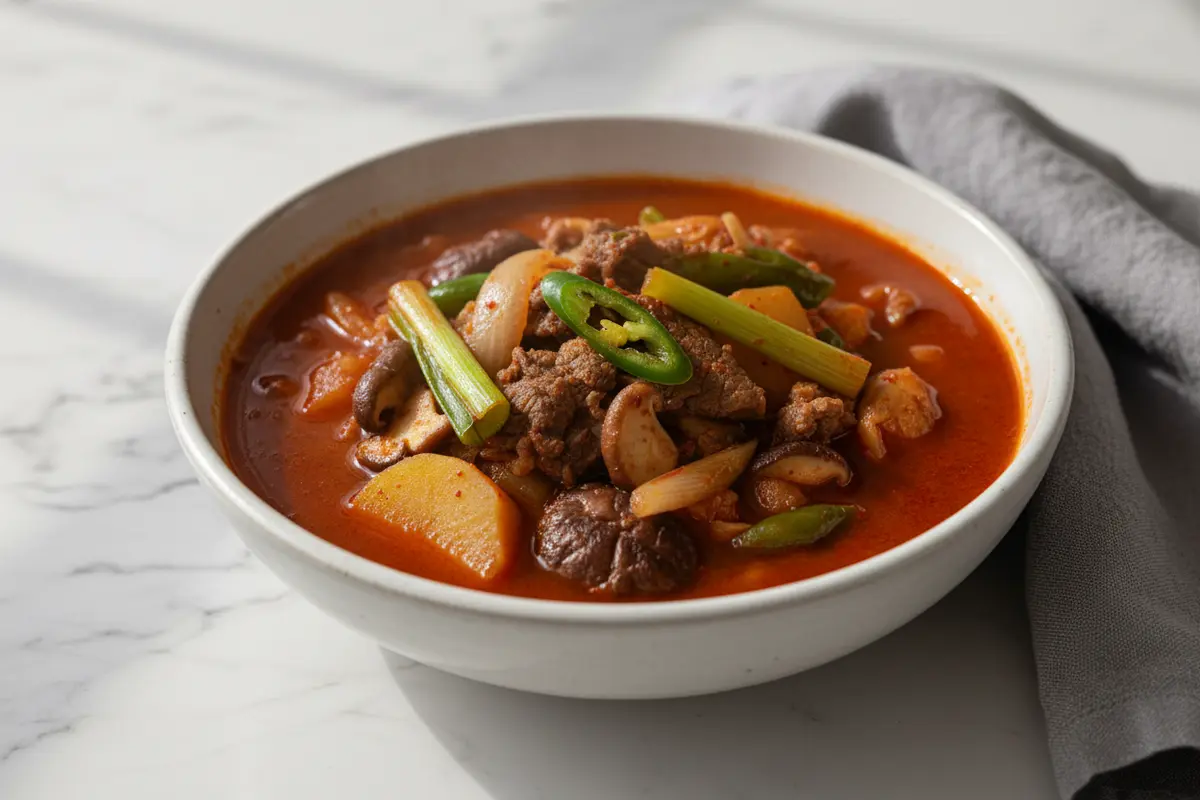
Gochujang Jjigae
Ingredients
Equipment
Method
- Slice the spring onion stalks into thin rounds. Cut the potato into thin slices.
- Slice the onion thinly, and slice the chili peppers very thin. Cut your protein into small, thin slices.
- Separate the oyster mushrooms into individual pieces and slice the shiitake mushrooms thin. Measure out your gochujang and set it aside.
- Heat vegetable oil and sesame oil together in a large pot or wok over low heat.
- Once hot, add the gochujang and stir-fry for 45 seconds to 1 minute until it starts to sizzle and bubble in the oil.
- Stir in the gochugaru, then immediately add the water. Raise the heat to medium-high and bring to a boil.
- Add the sliced protein and potato slices to the boiling liquid. Stir in the minced garlic, soy sauce, and fish sauce.
- Let it boil for 5 minutes. The potatoes should start to soften.
- Add the onion slices, both types of mushrooms, and the sliced chili peppers. Return to a boil and simmer for 7–10 minutes more.
- Stir in the fresh spring onion slices and crack 8–10 grinds of black pepper over the top.
- Turn off the heat and let the stew rest for 10 minutes. Taste and adjust if it feels too salty.
